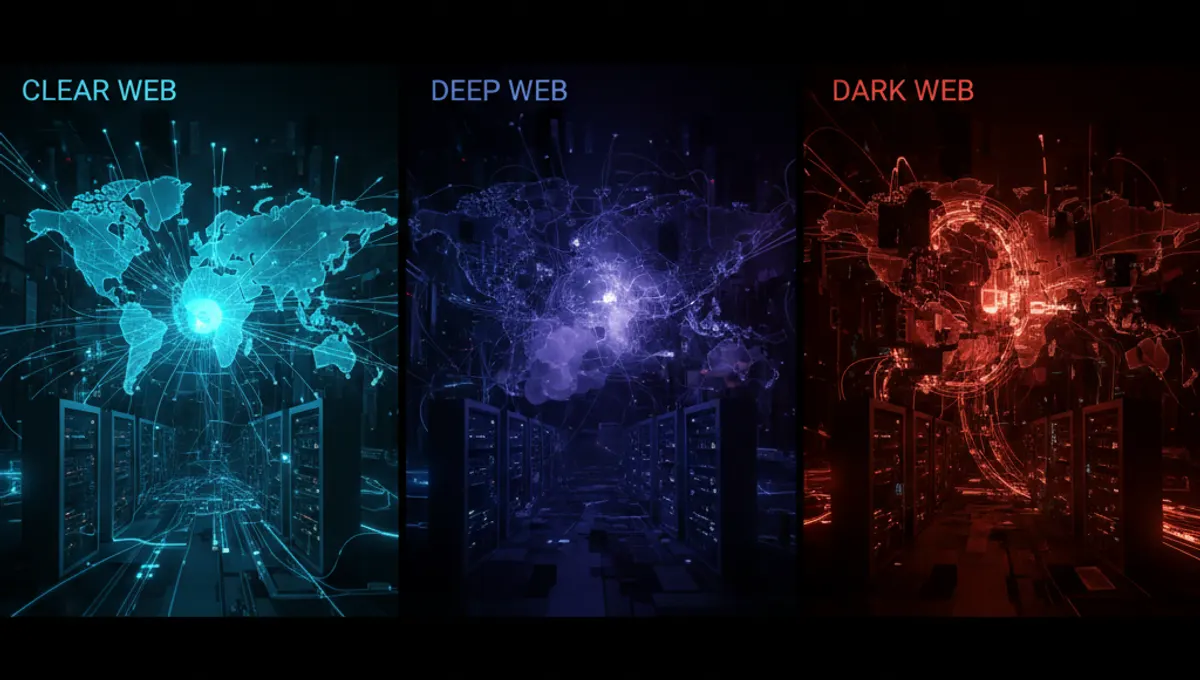
What Is the Clear Web
The clear web, also called the surface web, comprises all publicly indexed websites accessible through standard browsers like Chrome or Firefox. Search engines crawl and catalog these pages, making them discoverable through Google or similar platforms. This includes news outlets, social networks, e-commerce sites, and blogs. The clear web represents roughly 4-10% of total internet content. Websites use standard HTTP or HTTPS protocols, and your IP address is visible to website operators. Most everyday internet activity happens here. There are no special tools needed to access it, and content is generally regulated by local laws and platform policies.
Understanding the Deep Web
The deep web encompasses all internet content not indexed by search engines. This includes password-protected accounts, subscription services, academic databases, medical records, and corporate intranets. Your email inbox is part of the deep web. So are online banking portals, Netflix libraries, and legal documents stored in private servers. The deep web is not inherently anonymous or illegal—it's simply content behind authentication walls. Accessing it requires credentials or authorized access. Most people interact with the deep web regularly without realizing it. The deep web and dark web are often confused, but they are fundamentally different. The deep web is far larger than the dark web and contains mostly legitimate, everyday content.
What Defines the Dark Web
The dark web is a small portion of the deep web intentionally hidden and accessible only through specific software like Tor Browser. It uses encrypted networks that route traffic through multiple relays, obscuring user location and identity. Websites on the dark web use .onion addresses instead of standard domain names. The dark web enables anonymous communication and can protect users in countries with heavy censorship. It also hosts illegal marketplaces, though the majority of dark web activity is legal—journalists, activists, and privacy-conscious individuals use it for legitimate purposes. Accessing the dark web requires deliberate action and specialized tools. It is not indexed by search engines and requires knowledge of specific addresses to navigate.
Deep Web and Dark Web: Common Misconceptions
Many people conflate the deep web with the dark web, assuming all non-indexed content is anonymous or illegal. This is incorrect. The deep web is mostly mundane—your email, bank account, and subscription services. It requires authentication but offers no special anonymity. The dark web, by contrast, is designed for anonymity through encryption and routing. Another misconception is that the dark web is exclusively criminal. While illegal markets exist there, so do legitimate forums, privacy-focused communication channels, and resources for people in oppressive regions. Understanding this distinction prevents unnecessary fear about everyday internet use. Your email and banking activity are deep web, not dark web. They are protected by passwords and encryption, but not by the anonymity features of the dark web.
How to Access Each Layer Safely
Accessing the clear web requires no special precautions beyond standard security practices—use strong passwords, enable two-factor authentication, and keep software updated. For the deep web, use the same practices plus a VPN if concerned about your ISP logging activity. For the dark web, use Tor Browser, which is the official tool maintained by the Tor Project. Download it only from the official website to avoid malware. Pair Tor with a VPN for additional security, though this adds complexity. Never maximize your browser window on Tor, as this can reveal your screen resolution and aid fingerprinting. Disable JavaScript in Tor Browser settings. Do not open files downloaded from the dark web unless absolutely necessary, and use a virtual machine or isolated system if you do. Keep your operating system and all software fully patched.
Security Risks and What to Avoid
On the clear web, risks include phishing, malware, and data breaches. Use a password manager, verify URLs before entering credentials, and avoid public Wi-Fi for sensitive transactions. On the deep web, the same risks apply, plus the risk of credential theft if your password is weak. On the dark web, additional risks emerge: malware in downloads, scams in marketplaces, law enforcement monitoring, and malicious exit nodes that can intercept unencrypted traffic. Never enable plugins or extensions in Tor Browser. Do not resize your browser window, as this aids fingerprinting. Do not use the same username across multiple dark web sites. Do not assume anonymity is absolute—metadata, behavioral patterns, and mistakes can compromise identity. Do not download files unless necessary, and use antivirus software. Assume any marketplace or forum could be a honeypot or scam.
Practical Comparison: Access Methods and Use Cases
Clear web access is instant and requires only an internet connection. Use cases include research, shopping, communication, and entertainment. Deep web access requires credentials but uses standard browsers. Use cases include email, banking, medical records, and subscription content. Dark web access requires Tor Browser and takes longer due to routing through multiple relays. Use cases include anonymous communication, accessing censored information, privacy-focused forums, and journalism in restricted regions. Clear web offers speed and convenience but minimal privacy. Deep web offers privacy through authentication but not anonymity. Dark web offers anonymity but slower speeds and higher technical barriers. Choose based on your actual needs. Most people never need the dark web. If you do, understand the risks and use proper tools.
Frequently asked questions
Is the deep web the same as the dark web?
No. The deep web is all non-indexed internet content, including email and banking. It requires authentication but not anonymity tools. The dark web is a small part of the deep web designed for anonymity using encrypted networks like Tor. Most deep web activity is routine and legal.
Can I access the dark web on my phone?
Yes, but with limitations. Tor Browser is available for Android. iOS access is more restricted. Phone-based access carries higher risks of malware and fingerprinting. A dedicated device or virtual machine is safer for dark web use.
Do I need a VPN to use Tor?
No, but many users add a VPN before connecting to Tor for additional privacy. This prevents your ISP from seeing that you use Tor. However, using both adds complexity and can slow connections. The choice depends on your threat model.
Is everything on the dark web illegal?
No. While illegal markets exist, the dark web also hosts legitimate forums, privacy-focused communication, journalism resources, and information for people in censored regions. Anonymity itself is legal in most jurisdictions.
How do I find dark web sites?
Dark web sites use .onion addresses, not standard URLs. They are not indexed by search engines. Addresses are shared through forums, directories, or word-of-mouth. Exercise extreme caution with any address, as scams and malware are common.